The Wild Intelligence of Emotion
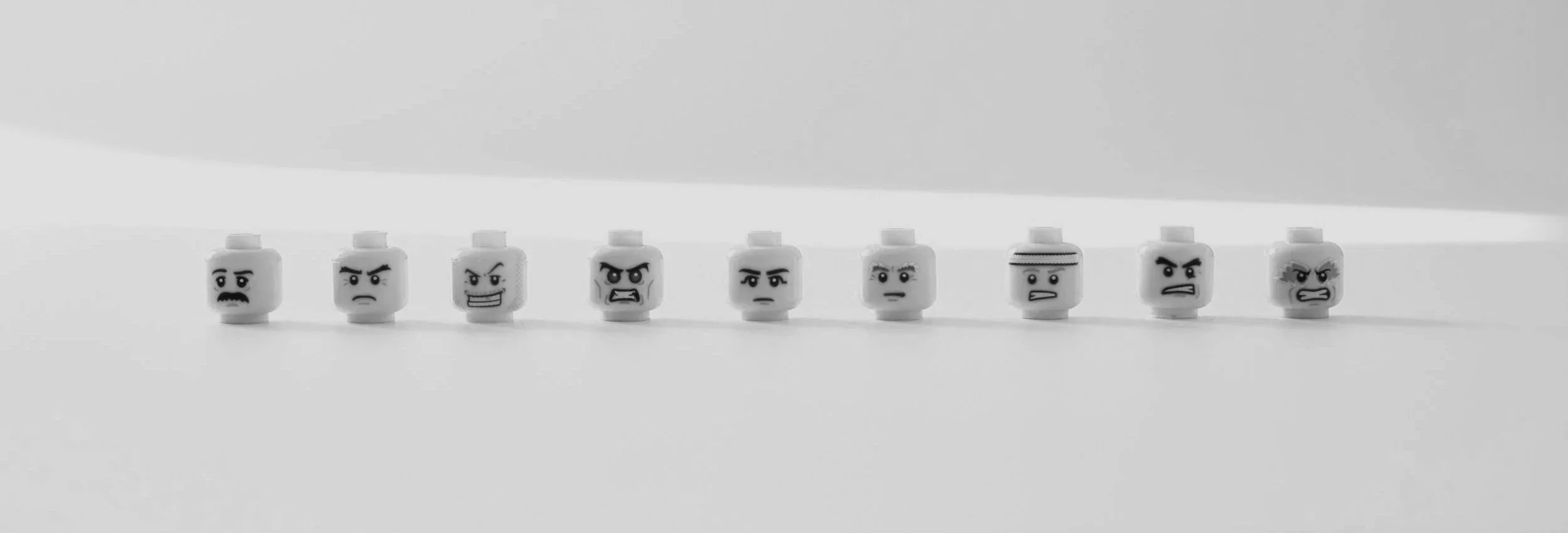
We live in a culture that treats emotions like pests — something to trap, suppress, or medicate away. Anger is labeled as “unprofessional.” Sadness is called “depression.” Fear is “irrational.” Even joy, when too big or too bright, gets policed by the subtle shame of “too much.”
But beneath these judgments lies a truth our ancestors knew well: emotions are not enemies. They are messengers — wild signals from the body’s deep intelligence, evolved to help us survive, connect, and adapt to the living world.
The Evolutionary Wisdom Beneath Feeling
Before language, before thought, we had feelings. Our nervous systems were tuned to the pulse of the environment — to danger, to safety, to belonging. Fear sharpened our senses, preparing us to flee or fight. Anger surged when our boundaries were crossed. Grief softened us into surrender and rest. Joy signaled connection and safety, strengthening the bonds that kept our species alive.
These weren’t “bad” or “good” emotions. They were information — bio-intelligence woven into flesh.
But somewhere along the way, as civilization built walls and hierarchy, the rawness of emotion became inconvenient. Societies that valued order over aliveness began to pathologize feelings. The wild pulse of emotion — once our compass — became something to “manage.”
The Domestication of Emotion
Modern culture prizes control. Productivity. Politeness. We are rewarded for being regulated — not in the nervous system sense, but in the social sense.
We’re taught to keep it together. Smile. Numb. Move on.
Yet every emotion we suppress doesn’t disappear — it reroutes. Unfelt anger becomes exhaustion. Unacknowledged fear becomes anxiety. Unexpressed grief becomes numbness.
The result? A collective disconnection from the very guidance system that evolved to keep us balanced and alive.
Rewilding Emotional Intelligence
To rewild emotion is to remember that feeling is not failure. It is data — the body’s language for truth.
Instead of asking, “How do I fix this feeling?” we can ask, “What is it trying to tell me?”
Anger may be saying: A boundary has been crossed.
Fear: Something needs attention or reassurance.
Sadness: A loss needs to be honored.
Joy: This is aligned — more of this.
Shame: You’ve internalized a story that isn’t yours — something in you longs to be seen, not silenced.
Guilt: Your actions and your values are out of sync — repair or recommitment may be needed.
Envy: There’s a desire here — a mirror showing you what you, too, are meant to move toward.
Excitement: Your intuition is lighting up — life is calling you forward, even if it feels like fear at first.
When we listen, emotions guide us toward alignment. They show us where energy is stuck, what stories we’ve outgrown, and what our soul longs for next.
The Practice of Emotional Rewilding

Rewilding emotion doesn’t mean dramatizing or indulging every feeling. It means allowing them to move — through awareness, expression, and integration.
Try this:
Pause and locate. Where do you feel it in your body? Tightness, heat, weight, fluttering — the body speaks first.
Name it, without judgment. “This is fear.” “This is anger.” Naming activates the prefrontal cortex, integrating instinct with awareness.
Stay curious. Ask, “What is this emotion trying to protect or reveal?”
Move with it. Cry. Shout. Dance. Write. Let the energy express itself through the channels nature designed.
Rest. After emotion moves, the body naturally seeks stillness — like a forest after a storm.
Coming Home to the Body’s Knowing
To feel is to be alive. Emotion is not weakness — it’s life’s signal that we are still in relationship with the world.
When we honor emotion as intelligence, we restore the conversation between body, psyche, and spirit. We stop trying to be “emotionally stable” — and start becoming emotionally true.
Because stability isn’t the goal of a wild system.
Balance is. Flow is. Life is.
And emotion — in all its messy, magnificent, ever-changing form — is how life speaks through us.
Want to explore deeper?
Read next: The Work-Identity Split: Who Am I When I Stop Doing? — how modern life disconnects us from our inner signals and how to reclaim worth beyond performance.