Breathwork and the Animal Mind
Before language.
Before morals.
Before the endless self-improvement industrial complex told you to fix yourself.
There was breath.
Not optimized breath. Not monetized breath. Not “inhale abundance, exhale trauma” breath.
Just breath — ragged, rhythmic, instinctive — moving through an animal body trying to survive, sense, rest, and belong.
Your breath is older than your thoughts.
Older than your name.
Older than whatever story you’re telling yourself about who you’re supposed to be.
And your nervous system knows this.
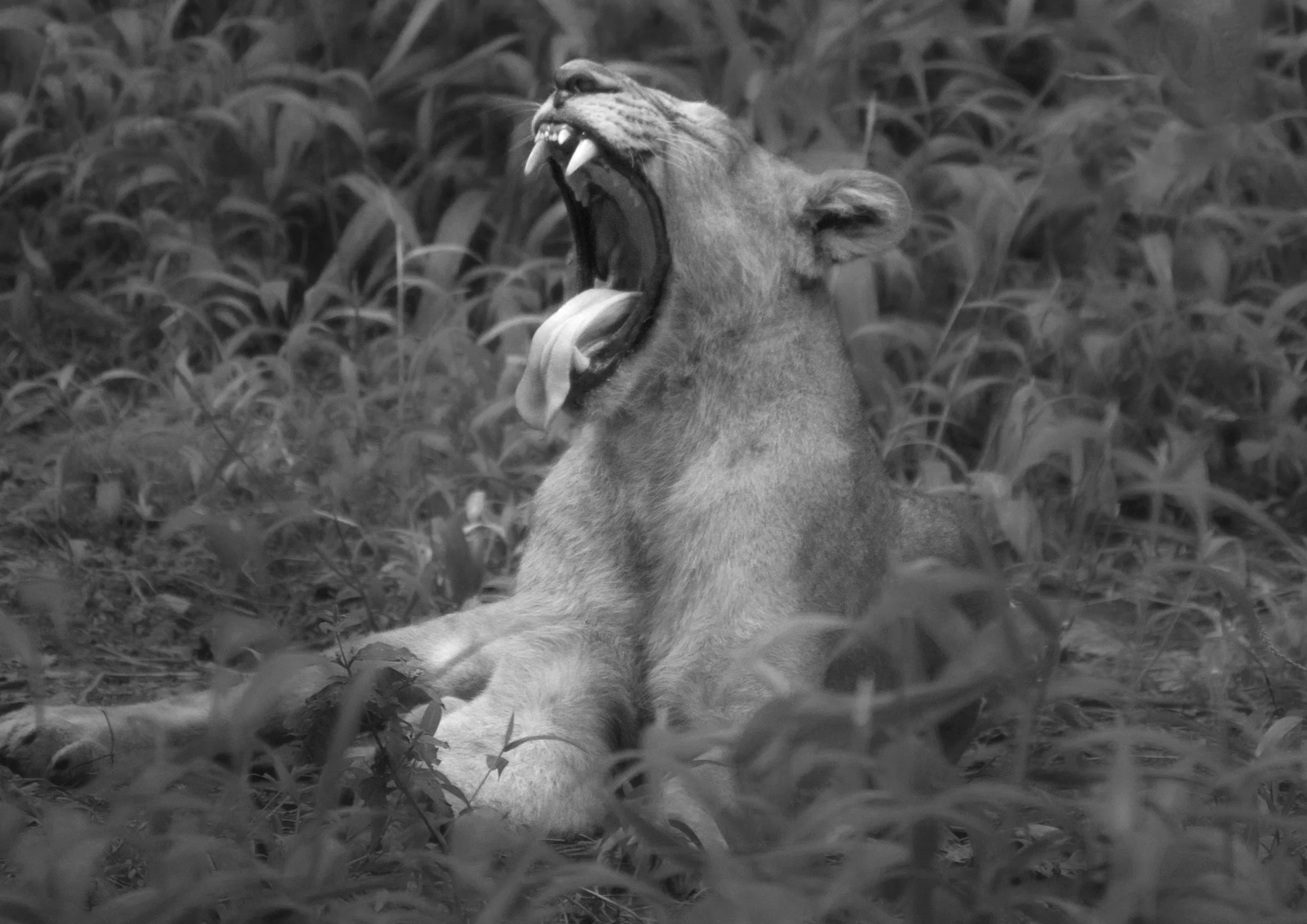
The Animal You Keep Trying to Transcend
We’ve been taught (subtly, relentlessly) that the goal is to rise above the animal.
Control it. Civilize it. Dominate it.
Sit still. Be productive. Don’t fidget. Don’t sigh. Don’t gasp. Don’t growl.
But breathwork doesn’t speak to your résumé.
It speaks to your mammal.
When you change your breath, you’re not “manifesting.” You’re communicating directly with the most ancient part of you — the part that doesn’t care about your five-year plan, but deeply cares whether you are safe, hunted, held, or cornered.
The animal mind doesn’t respond to logic.
It responds to sensation.
And breath is sensation made audible.
Breath as a Language the Body Understands
Think about a dog.
When it’s calm, its breath is slow, deep, soft.
When it’s threatened, breath turns sharp, fast, shallow.
When it’s playful, its panting, expansive, loose.
When it’s wounded, its guarded, minimal, careful.
No dog needs a podcast to explain this.
The breath is the emotional state.
Humans are no different — we’ve just learned to override the signals, intellectualize them, and then wonder why our bodies feel like hostile territory.
Breathwork strips away the translation layer.
It bypasses your stories and goes straight to the switchboard.
Slow exhale?
You tell the animal: Stand down. The threat has passed.
Sharp inhale?
You tell the animal: Wake up. Pay attention.
Held breath?
The body says: I’m bracing. Something isn’t safe.
The animal mind listens. Always.
Why Breathwork Can Feel Intense (or Scary)
People often say, “Breathwork brought things up I wasn’t expecting.”
Of course it did.
You stopped sedating the animal with distraction, caffeine, productivity, and noise — and then you were surprised it had something to say?
Breathwork removes the muzzle.
The animal mind stores memory not as narrative, but as sensation: pressure, temperature, tightness, collapse, expansion. When you alter your breath, you unlock those storage rooms.
This isn’t pathology.
It’s biology.
Your body is not broken — it’s been waiting.
Regulation Before Revelation
FERAL truth:
If your nervous system is dysregulated, your spiritual insights will be too.
The animal mind doesn’t want transcendence first. It wants safety.
That’s why breathwork isn’t about blasting yourself into catharsis or forcing release like a spiritual CrossFit workout.
Sometimes the most radical thing you can do is breathe less dramatically.
Slower. Softer. Longer exhales.
Breathing like a creature resting in tall grass — not hunted, not hunting.
Regulation isn’t boring. It’s what allows the animal to trust you again. And trust is the gateway to everything else — intuition, creativity, connection, even grief.

Breath as Rewilding
Rewilding isn’t about going back to some romanticized past. It’s about restoring relationship.
When you breathe consciously, you stop treating your body like a machine and start treating it like a living ecosystem.
You remember:
That panic is not weakness — it’s a startled nervous system.
That stillness isn’t laziness — it’s recovery.
That emotion isn’t chaos — it’s information.
Breathwork reintroduces you to yourself as an animal among animals, subject to rhythms you didn’t invent but can relearn.
Tides.
Seasons.
Cycles of expansion and contraction.
Inhale: take in the world.
Exhale: let it go.
No moral value attached.
The Animal Mind Doesn’t Need Fixing — It Needs Listening
Here’s the quiet heresy beneath breathwork: You don’t need to conquer your animal nature. You need to befriend it. The animal mind is not the enemy of wisdom. It is wisdom without language.
When you breathe with intention—not force—you stop asking, “How do I control myself?” And start asking, “What is my body responding to right now?”
That question alone can change a life.
So the next time you sit with your breath, don’t treat it like a technique. Treat it like a conversation.
The animal is already listening.
You were never meant to override your body — you were meant to inhabit it.
If breathwork is the doorway, sovereignty is what waits on the other side.
Read The Sovereign Body: Reclaiming What Was Always Yours and remember what was taken, tamed, or trained out of you—and how to take it back without apology.
Because nothing truly wild ever needed permission.