The Circle Way: Remembering Non-Hierarchical Connection
The Myth of the Lone Leader

Modern culture glorifies the individual — the CEO, the influencer, the visionary. We’re told that success is a solitary climb, that leadership means standing above others, and that progress demands competition.
But this story is a distortion — a symptom of disconnection. Before hierarchy, before capitalism, before the idea that some were “born to lead” while others were “meant to follow,” there was the circle.
Across cultures, our ancestors gathered in circles to make decisions, grieve, celebrate, and create meaning. The circle wasn’t just a shape — it was a worldview. No one sat at the head because there was no head. Wisdom was collective, not commanded.
The Circle as Ancient Technology
Indigenous peoples around the world have long used circular forms of gathering and governance — from the talking circles of many Native American nations, to the council fires of the Haudenosaunee Confederacy, to the village assemblies of Africa and the Pacific Islands.
In the circle, the center — not any one person — holds the power. The talking piece moves clockwise, ensuring everyone has a voice. Silence is honored as part of the conversation. Listening is as sacred as speaking.
The circle was humanity’s original technology of belonging — one that kept relationships, responsibility, and reciprocity in balance.
From Leadership to Stewardship
Our modern systems are built on pyramids — literal and figurative. We’ve been conditioned to believe that order requires hierarchy, that someone must be “in charge.” Yet the natural world shows us otherwise: forests, coral reefs, mycelial networks — all thrive through decentralized cooperation.
What if we led like the forest?
To move from leadership to stewardship means shifting from power over to power with. It’s not about relinquishing responsibility, but redistributing it — trusting that collective intelligence can hold more complexity than any single mind.
Stewardship asks: How can I tend to the health of the whole? How can I serve the circle rather than seek to control it?
Remembering the Circle in a Linear World
Our current systems make circles hard to hold. Meetings have agendas, decisions are rushed, and efficiency often trumps equity. But remembering the circle isn’t about romanticizing the past — it’s about reclaiming the wisdom of interdependence that modern life has forgotten.
Practicing the Circle Way in everyday life might look like:
Listening without interrupting — trusting that each voice carries a fragment of the whole truth.
Rotating facilitation — sharing responsibility for guidance and group energy.
Opening and closing rituals — marking the sacredness of gathering.
Speaking from the heart, not the ego — using “I” statements, not abstractions or assumptions.
Honoring the unseen — pausing for silence, gratitude, or reflection before decisions.
Even in workplaces or organizations bound by hierarchy, these small shifts create pockets of relational coherence — remembering that beneath titles and roles, we are equals in the web.
The Circle as Medicine for Our Times
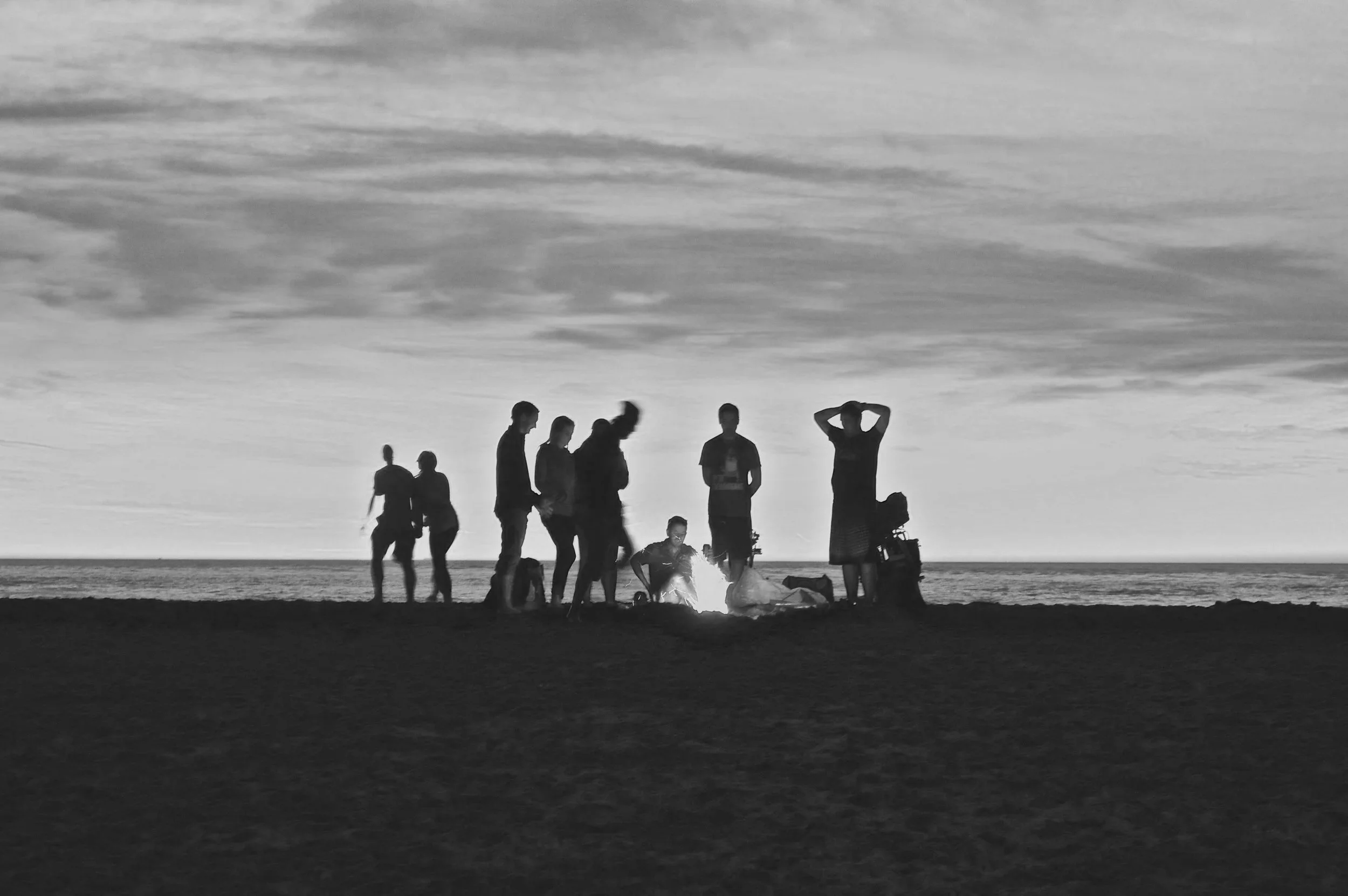
We live in an age of fragmentation — politically, socially, spiritually. The Circle Way offers a way home. It reawakens a memory in the body that knows how to belong without dominance, how to lead without control, how to love without possession.
The circle invites us to sit down, slow down, and remember: we are not separate. What we do to one, we do to all.
When we remember that truth — and live from it — we begin to move from competition to collaboration, from hierarchy to harmony, from “me” to we.
Practices for Reclaiming the Circle
Host a Circle Gathering — Invite friends or community members to sit in a circle. Use a talking piece, open with a moment of silence, and choose a meaningful question to explore.
Practice Rotating Leadership — In work or creative projects, experiment with shared facilitation and decision-making.
Acknowledge the Center — In every circle, place something symbolic at the center (a candle, stone, or bowl of water) to remind everyone that the power lives there, not in any one person.
Study Indigenous Protocols — Learn (with permission and respect) from the cultures that have sustained circle practices for millennia.
Bring the Circle into Systems — Whether it’s a team meeting or a family dinner, integrate principles of equal voice, slow time, and shared reflection.
Remembering What the Circle Knows
The circle is not a new idea — it’s an old remembering. A return to what the Earth has always modeled: balance, reciprocity, and reverence.
When we gather in circles, we practice the ancient art of being human together — not above or below, but beside one another.
That is where true leadership lives. In the center.
Ready to bring the circle into your daily life?
Continue exploring how we heal and belong through shared care, ritual, and connection in Remembering the Village: Healing Through Community.